![<p>They learn that decisions are made FOR them, not WITH them, that their opinions matter less than those of adults and to stay silent rather than speak up. 🤐 And later, as adults, we wonder why so many people feel disconnected from public life, reluctant to engage in their communities, […]</p>](https://consensius.eu/wp-content/uploads/2026/06/Democracy-4-All-1.png "🗳️ What happens when children are not invited to participate?")
![<p>When you view the concept of questioning rules in the frames of Ira Chaleff’s book #IntelligentDisobedience – this idea seems to have powerful implications for education. When we teach democracy, we often focus on participation, voting, cooperation, and respecting rules. These are essential skills. 🗳️🤝 But democratic societies also depend […]</p>](https://consensius.eu/wp-content/uploads/2026/06/Democracy-4-All.png "👧🧒 What if teaching democracy to young children was not primarily about teaching them to follow rules – but about teaching them when to question them?")
![<p>In many classrooms, rules are something students #receive. But what happens when children are invited to #shape them instead? In our Erasmus+ project on teaching democracy to children, we’ve been exploring a simple but powerful shift: moving from imposed rules to co-created agreements 🤝 When students take part in building […]</p>](https://consensius.eu/wp-content/uploads/2026/05/Democracy-4-All-1.png "🗳️ From classroom rules to civic culture: why co-creating rules matters")
Dlaczego warto wybrać mediację
EFEKTY
Mediator dba, żeby strony nie czuły się pokrzywdzone, a Ty masz realny wpływ na warunki porozumienia.
CZAS
Oszczędzasz czas, bo mediacja jest szybsza niż rozwiązywanie konfliktu na drodze sądowej.
KOSZTY
Stosując mediację unikasz kosztów sądowych oraz wielu kosztów obsługi prawnej sporu.
ZDROWIE
Spokojny proces mediacji zaoszczędzi Ci stresu i uchroni przed kosztami emocjonalnymi.
"Konflikt tkwi nie w obiektywnej rzeczywistości, lecz w umysłach ludzi" William Ury
dowiedz się na czym polega mediacjaMEDIACJE RODZINNE
Zapewniamy wsparcie w rozwiązywaniu konfliktów powstałych na tle szeroko rozumianych stosunków rodzinnych, np. między małżonkami, partnerami, rodzicami a dziećmi, rodzeństwem.
Read MoreMEDIACJE GOSPODARCZE
Mediujemy w sporach między przedsiębiorcami - zarówno małymi firmami, jak i dużymi korporacjami - powstałych na tle niedotrzymania warunków umowy, wzajemnych rozliczeń i wielu innych spraw gospodarczych.
Read MoreMEDIACJE PRACOWNICZE
Służymy wsparciem i doświadczeniem w procesie rozwiązywania konfliktów powstałych w miejscu pracy, np. pomiędzy pracownikiem a pracodawcą, pracownikiem a przełożonym, pracownikiem a pracownikiem – na każdym etapie trwania sporu.
Read MoreMasz pytania?
Napisz lub zadzwoń. Nasi mediatorzy chętnie odpowiedzą na wszelkie pytania. Jesteśmy do Twojej dyspozycji.
Skontaktuj się z nami 🗳️ What happens when children are not invited to participate?
They learn that decisions are made FOR them, not WITH them, that their opinions matter less than those of adults and to stay silent rather than speak up. 🤐 And later, as adults, we wonder why so many people feel disconnected from public life, reluctant to engage in their communities, […]
👧🧒 What if teaching democracy to young children was not primarily about teaching them to follow rules – but about teaching them when to question them?
When you view the concept of questioning rules in the frames of Ira Chaleff’s book #IntelligentDisobedience – this idea seems to have powerful implications for education. When we teach democracy, we often focus on participation, voting, cooperation, and respecting rules. These are essential skills. 🗳️🤝 But democratic societies also depend […]
🗳️ From classroom rules to civic culture: why co-creating rules matters
In many classrooms, rules are something students #receive. But what happens when children are invited to #shape them instead? In our Erasmus+ project on teaching democracy to children, we’ve been exploring a simple but powerful shift: moving from imposed rules to co-created agreements 🤝 When students take part in building […]

🧒⚖️ Teaching children about their rights is essential
However, rights without responsibility create entitlement, not democracy. When young people learn that their voice matters, they should also learn: 🤝 to listen to others, 💬 to disagree respectfully, 🌍 to care about their community, and 🛠️ to take responsibility for their actions. Democracy starts long before voting age. It […]

What does ‘participation’ look like for a 6-year-old?
Not voting or policy debates but #BeingHeard and #TakenSeriously. It can be: 🧩 Solving playground conflicts together 📚 Shaping classroom rules 🎨 Having a say in shared spaces Participation isn’t a future skill. It’s a present right. When it’s meaningful, children build confidence, agency, and a real sense of democracy. […]

For many adults, #democracy can feel like a big, complicated, even contested word
It may carry political tension, historical weight, or different meanings depending on experience. But what if we started somewhere simpler? What if, for children aged 5-9, democracy was first understood not as a system… but as a feeling of belonging. 🌱 When young children experience: 🗣️ being heard 🤝 taking […]
🌈 Czy dzieci w wieku 5-9 lat mogą uczyć się demokracji i praw obywatelskich?
Tak – i to szybciej, niż się wydaje, jeśli poświęcisz chwilę na wypełnienie krótkiej ankiety! 💡✨ Pewien maluch chciał rządzić klockami, Orzekał, decydował… choć był między maluchami. Gdy ktoś spytał: „A głosowanie?” Powiedział: „Tylko jeśli ja wygram – kochani!” Tak rodzi się demokracja… czasami 😂 W ramach projektu „Democracy in […]
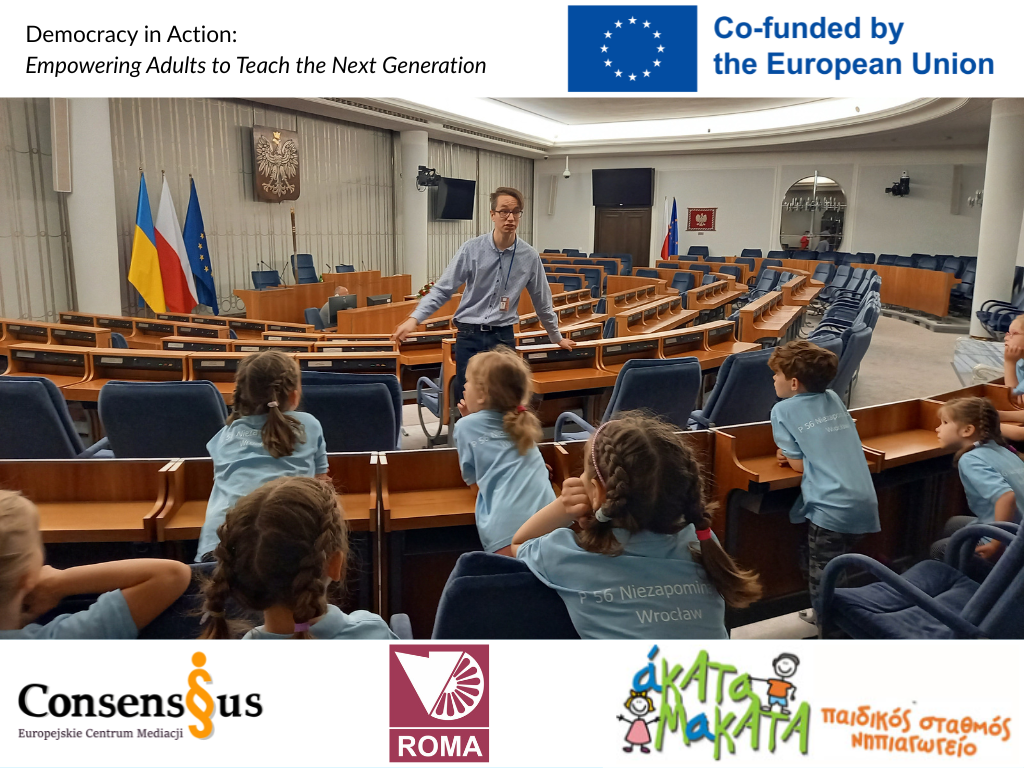
Democracy in Action: Empowering Adults to Teach the Next Generation
❓Jak często Przedszkolaki i dzieci w kl. 1-3 mają realną szansę współdecydować o tym, co dzieje się wokół nich? ❓Czy uczymy dzieci demokracji… czy tylko o niej opowiadamy? Te pytania stały się dla nas punktem wyjścia do stworzenia projektu, z którym właśnie startujemy i będziemy go prowadzić do końca 2026 roku. […]

🌳 Can a walk in the park teach democracy? Yes – if we look & listen closely
Nature education isn’t just for children.For many adult learners, a simple walk through the forest, along a riverbank 🌊, or in a city park 🌼 can be a powerful entry point into understanding democratic values and civic belonging.🌱 In nature, we witness:🌀 Interdependence🌈 Diversity💪 Resilience⚖️ Balance– the very foundations of […]

What if teaching democracy didn’t start with theory – but with walking through a forest together? 🌳🗳️
This week, we had the chance to explore that and much more in Lower Silesia, during common workshops in Kotlina Kłodzka (Kłodzko, Polanica Zdrój) and further – Świdnica and Krzyżowa with a group of dedicated adult educators from Austrian RomaVHS. All of that within a great Erasmus+ Project – Teaching […]